Friday, February 14, 2014

Interviewing Janeth an expert on facial expressions

For this assignment I decided to interview my sister Janeth Cabrera. She is currently enrolling at College of the Redwoods.  Through this interview, we will be learning why Janeth is an expert at reading facial expressions.
Q: Why are you an expert in reading facial expressions?
A: I am an expert because I have studied the human body in college and that includes facial expressions.

Q: What courses did you take that made you an expert?
A: Well I took psychology, and sociology.

 Q:  Was it difficult to learn about reading faces?
A: Well I wouldn’t say difficult it was mostly interesting.

Q: How has this changed your life?
A: This changed my life because I can tell when people are lying to me.

Q: Do you think you know enough about reading facial expressions to teach others? Why or why not?
A: Well I think I could but I don’t think I would do it because I’m not good at teaching.   

Q: Thank you for your time.


As you just read, Janeth Cabrera is clearly an expert at reading facial expressions. 

Friday, February 7, 2014

Guest Post from Bernice!

There are many kinds of masks around the world. Some masks are funny looking, horrible or scary masks. They are used in plays, at Halloween, at parties, and in rituals. Masks represent a monster, a famous person, a particular age, and also there is random ones. Masks are used to make people laugh, to scare them, and also to cover an identity. They are used by almost any kind of people from children to elderly people.


The masks around the world are used differently. In Africa they are used in shamanic rituals and as cultural props for initiation into puberty and an adult role in village society. In North America there is a mask that the Inuit of Alaska made masks to honor their dead, as well as ceremonial masks for shamans. In Latin America the masks express themselves with color and a wide variety of materials such as fur, papier mache, leather and molded metal. In Oceania aboriginal masks are present in initiation ceremonies.

Masks have been used for a long time now. They are used for many reasons as some of them were mentioned before. Every place has its own reason. Many people don't realize that masks are an important part of culture.

The types of masks that are common are the theater masks, masquerade masks, and half-face mask. The theater masks focus an audience's attention on the actor's movements and speech, and the design can amplify sound waves and reach more people during a performance. The masquerade masks also known as Venetian masks are standard in balls. They come in a variety of shapes, sizes, and formats for men and women. They add elements of mystery and glamour to parties. The half-face mask is the most common type which covers only the eye area. I would like to go to a party that uses a half-face masks, but I haven’t to one.
Berenice S

Friday, January 31, 2014

Relating Art to English

I chose to base my blog off of my AP Art concentration to help build my portfolio. My blog has helped both in Art and in English because I am able to use what I learn in both classes. I can write about what facial expressions mean in society and in the art world. I can also connect the meanings of colors that are represented in paintings. Not only because a color wheel says that purple and orange are complementary colors, but also because of the meaning of understanding that red represent anger, passion, and love. Colors are based off of feelings. Feelings that are shown through facial expressions. Also, discovering the human brain and its connections to emotions has helped me improve on my drawings skills. Learning of the importance of someone's glare or how our eyebrows make a V shape when we are angry, has helped me concentrate more on the little details in the human face when drawing a portrait.  

Wednesday, January 15, 2014

Facial expressions in Geishas and Nohs

The majority of my posts have been mainly focused on how emotions can be read through facial expressions.  Although, there are other ways to unfold and demonstrate our emotions, for example, masks and face paintings. In the Japanese and Chinese cultures geishas are a very unique and traditional way of expressing who we are and what we feel. Geishas are entertainers that are trained to portrait great art, excellent dancing, and music. The Geisha came to life when long ago Japanese men traveled to Europe and came back speaking about “white beauties”. This was interoperated as having an actual white face. Many women who are Geishas serviced many American soldiers during times of war. A Geisha consists of having an extremely white face to represent kindness, loyalty and purification.  They must also have a lick layer of eye liner to show their elegance and formality. Lastly, they must wear deep red lipstick. Their red lip stick represents their power, passion, desire, and love.  Although Geishas are entertainers, they can sometimes be seen as prostitutes or call girls.   
A very traditional type of mask in the Japanese culture is a Noh. These very special masks are used in theaters and when performing a cultural dance. This mask gives the actor a certain power to every performer. They are mainly used in religious conditions and are highly valuable. Most of the masks have been in a family for many generations. There are six types of masks: Okina (old man’s mask), Jo (elders mask), Onna-men (woman masks), Kishin(demons), Onryo(gosts and spirits). When a person wears a Noh, they transform into a different spirit and spiritually leave the human world. They are sucked in to a new world where they are communicating with their ancestors. Each mask represents feelings and emotions without showing a single part of their faces.

Facial expressions might be much easier to understand and interoperate, but masks and face painting are much more meaning full than any smile or frown.            


Tuesday, January 14, 2014

Kinsly's facial expressions in just seconds!


Happiness


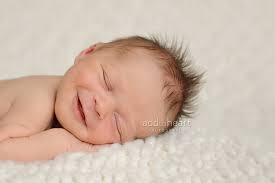
Happiness is a universal facial expression and are easily recognized. They are interpreted as messages of feeling excitement, enjoyment, pleasure or simply just feeling content with yourself. Although, not all smiles are what they appear. There are times when a smile can be used to hide other emotions that the person wants to hide. For example, celebrities and political figures can use a happy and satisfied faces to manipulate their public into thinking they are they are feeling fine only to maintain a professional look.    


Monday, January 13, 2014

How do babies learn facial expressions?

Before babies learn how to talk, they learn how to absorb emotions and understand what you are trying to say because of your tone of voice. Babies learn from what they see others do. They love to see their parents facial expressions and will use them as their role models. They go from only absorbing the different vibes around them to actually interpenetrating what they feel through facial expressions. Apart from learning from their parents, babies are born with a natural instinct that tells them to smile when they are happy and frown when they are sad. For the most part, humans are born with common sense to let our emotions be read through our facial expressions.